Firs Primary School
Design and Technology
The Design and Technology Curriculum is currently under review. All updates will be complete by Summer 2026.
Design and Technology gives children the opportunity to explore pre-existing products, understand areas such as cooking and nutrition, mechanisms, structures, textiles and electrical systems and use this knowledge to create a solution to problems. It allows children an opportunity to draw on learning from subjects such as English, Science, Art, Maths, Environmental subjects and Computing. Also, children will be able to develop practical and lifelong skills to help them with their future.
National Curriculum
The National Curriculum for Design and Technology is divided into 5 key areas.
Evaluate
Key Stage 1
- explore and evaluate a range of existing products.
- evaluate their ideas and products against design criteria.
Key Stage 2
- investigate and analyse a range of existing products.
- evaluate their ideas and products against their own design criteria and consider the views of others to improve their work.
- understand how key events and individuals in design and technology have helped shape the world.
Design
Key Stage 1
- design purposeful, functional, appealing products for themselves and other users based on design criteria.
- generate, develop, model and communicate their ideas through talking, drawing, templates, mock-ups and, where appropriate, information and communication technology.
Key Stage 2
- use research and develop design criteria to inform the design of innovative, functional,appealing products that are fit for purpose, aimed at particular individuals or groups.
- generate, develop, model and communicate their ideas through discussion, annotated sketches, cross-sectional and exploded diagrams, prototypes, pattern pieces and computer-aided design.
Make
Key Stage 1
- select from and use a range of tools and equipment to perform practical tasks [for example, cutting, shaping, joining and finishing].
- select from and use a wide range of materials and components, including construction materials, textiles and ingredients, according to their characteristics.
Key Stage 2
- select from and use a wider range of tools and equipment to perform practical tasks [for example, cutting, shaping, joining and finishing], accurately.
- select from and use a wider range of materials and components, including construction materials, textiles and ingredients, according to their functional properties and aesthetic qualities.
Technical Knowledge
Key Stage 1
- build structures, exploring how they can be made stronger, stiffer and more stable.
- explore and use mechanisms [for example, levers, sliders, wheels and axles], in their products.
Key Stage 2
- apply their understanding of how to strengthen, stiffen and reinforce more complex structures.
- understand and use mechanical systems in their products [for example, gears, pulleys, cams, levers and linkages]
- understand and use electrical systems in their products [for example, series circuits incorporating switches, bulbs, buzzers and motors]
- apply their understanding of computing to program, monitor and control their products
Cooking and Nutrition
Key Stage 1
- use the basic principles of a healthy and varied diet to prepare dishes
- understand where food comes from.
Key Stage 2
- understand and apply the principles of a healthy and varied diet.
- prepare and cook a variety of predominantly savoury dishes using a range of cooking techniques.
- understand seasonality, and know where and how a variety of ingredients are grown, reared, caught and processed.
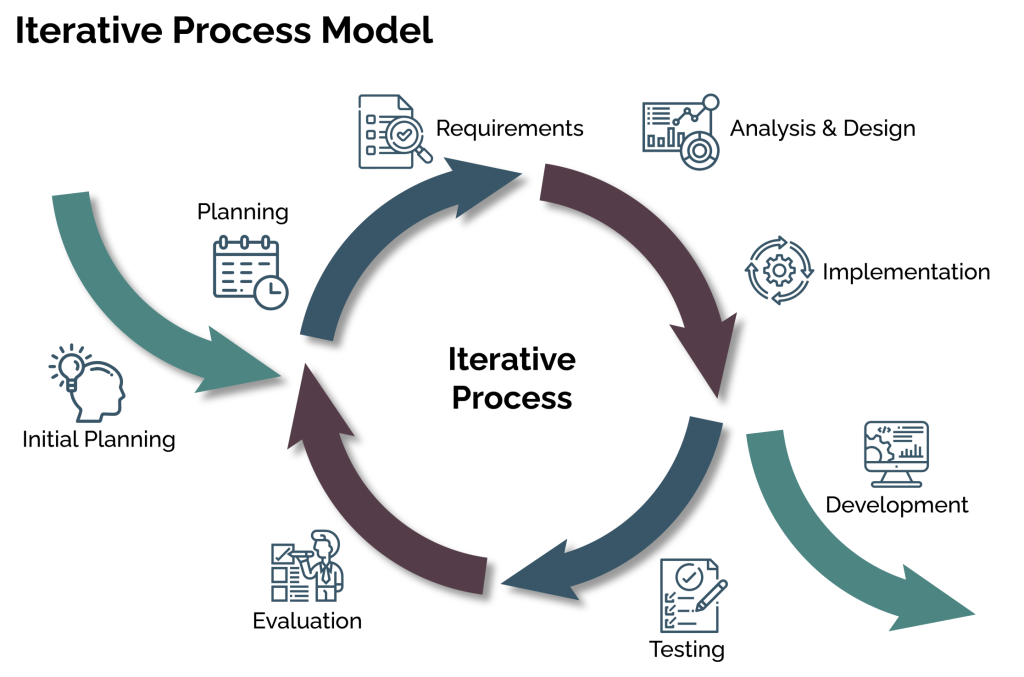
Iterative Design Process
Teaching and Learning
Knowing More and Remembering More
As the knowledge and understanding in each Design and Technology strand builds on the last project, it is crucial to ensure children recall and remember key facts before they explore the strand further.
At Firs, we do this by assessing children’s understanding in various ways.
Before we start a topic, teachers look at what prior knowledge children should have from previous learning. Teachers will then adapt planning and use questioning to fill those gaps.
Vocabulary
At Firs, it is important for children to develop their vocabulary and have the confidence to use key vocabulary to develop their ideas.
We do this through Word Aware, stem sentences and substitution tables. These help children to hear the technical vocabulary in context and build sentences to explain their ideas.
Mechanisms
Children develop and build their understanding as they explore mechanisms in KS1 and in KS2.
In KS1, children learn about sliders and levers. They complete focused tasks to explore how bridges/guides and pivots are used. They will then use this knowledge to create their own story with pages that include a moving element for the class to keep in their book corner.
They will also understand how wheels and axles work by exploring toys and pre-existing products. Then they will design, make and evaluate a mode of transport to solve a problem, using their design criteria.
In LKS2, they will build on their learning by investigating levers and linkages. They will be able to explain what an input/output is, the difference between a fixed and loose pivot and explain their design choices.
Textiles
Children expand their understanding as they explore fabrics, thread, stitches and sewing machines.
In KS1, children will learn to thread their own needle and use a simple running stitch to join two pieces of fabric, use a template to mark and cut out a simple pattern and identify different types of fastenings. Then they will design, make and evaluate a finger puppet (product) for the class (user) to create a display about superheroes (purpose).
In LKS2, children will learn to identify and create running stitch, back stitch, whip stitch and slip stitch. Considering the needs of the user, the children will design, create and evaluate a sack for the Tear Thief to carry her tears in, or a bag and potentially accessories to use as a story sack for the text.
In UKS2, children will research designers such as Coco Chanel and Laura Ashley. They will unpick existing products to explore various patterns and templates. Children will then use pattern pieces to mark out and cut out a pattern, leaving a seam allowance and use a sewing machine, with supervision, to join two pieces of fabric together.
Structures
In Year 1/2, the children will explore freestanding structures. During their geography field trip, the children can explore and evaluate pre-existing furniture. Then they should design, make and evaluate a freestanding structure which may link to a key or model text in English e.g. The Paperbag Princess.
In Year 5/6, the children learn about Earnest Shackleton’s expedition to the Antarctic. Children will design and make their own ‘expedition shelters’ by exploring previously made shelters. Then they will explore various techniques to strengthen and support the frame structures.
Electrical Systems
Electrical Systems are introduced in KS2.
In Year 3/4, children will explore how circuits are used in every day items. Using their understanding of circuits in Science, they will design and create a product using their design criteria and critical thinking skills.
In Year 5/6, the children will explore pre-existing products like Don’t Buzz the Wire and Operation and use their pre-existing knowledge of circuits to create their own electronic board game. They may choose to use micro:bits to add timers, lights or sensors to make the game interactive.
Cooking and Nutrition
Cooking and nutrition is taught every year to build upon and strengthen the children’s skills and understanding.
In KS1, children will explore various food groups and understand the benefits of eating these within their balanced diet. The children will then design and make their own pizzas, making design choices about their ingredients and where they come from.
They will also develop their understanding of the food groups, with a focus on fruits and vegetables. They will develop their cutting, chopping and grating skills and their understanding of food hygiene.
In Year 3 and 4, children will make focaccia bread. Children will taste and evaluate a range of ingredients before making the design choices for their own recipe. The children will investigate where their ingredients come from.
In addition, they will create a healthy pasta salad. The children must ensure their meal is well balanced and nutritious whilst also flavoursome. Children will develop their chopping techniques by using the bridge and claw techniques, in addition to peeling, chopping, draining and grating.
In Year 5/6, the children make a vegetable stew. The children look at how to measure ingredients and follow a simple recipe. They may choose to make design choices and add their own choices of seasoning, vegetables, stock to develop the flavour or texture within their stew.