Firs Primary School
Anti-Racism
Firs Primary School is continually working towards anti-racism. To inform our anti-racist pedagogy and practice, we have adopted the below definition from International Perspectives: Women and Global Perspectives:
Anti-racism is the active process of identifying and eliminating racism by changing systems, organisational structures, policies and practices and attitudes, so that power is redistributed and shared equitably.
As a school, we acknowledge the role of education in upholding institutional racism, and endeavour to dismantle it where it may occur within our setting. To learn more, please read our Anti-Racism Policy here. This document also details the key definitions and concepts that underpin our anti-racist philosophy.
Building an anti-racist school community
Here is a video of some of our pupils talking about school life and anti-racism at Firs.
We are committed to building and sustaining an anti-racist school community where every pupil, family and member of staff feels valued, respected and represented.
Our approach is closely linked to our EAL policy, reflecting the rich linguistic and cultural diversity of our school, where many pupils are new to English or speak English as an additional language. We recognise that language, identity and belonging are closely connected, and we work hard to ensure that all pupils see themselves reflected positively in the curriculum, school environment and wider school life.
The voices of pupils, parents and staff play a vital role in shaping our practice, and their feedback helps us continually reflect on and improve what we do so that it remains relevant to our ever-changing community.
Children are also taught about the importance of their voice and the positive impact it can have. Through our curriculum and school values, pupils learn to be respectful, to challenge injustice and to act as upstanders who speak out against discrimination and support others.
Anti-racism and identity in our curriculum
At Firs Primary School, we strive for a curriculum that prepares pupils for life within our multicultural society. We ensure that pupils engage in and understand current affairs and that they understand the role they may play in local and global issues. We teach all pupils to be anti-racist and teach them to be upstanders on issues of racism and discrimination. This is planned sequentially so that it is appropriate for where children are on their learning journey. To learn more, please read our racial literacy resource here.
Alongside this, we aim to embed racially and culturally diverse perspectives within our curriculum that allow children's identities and cultures to be reflected in the curriculum as well as encouraging them to think critically. We also include representations of protected characteristics so children can articulate these and learn about the breadth of experiences both within our school and globally. This document highlights where protected characteristics may be explored in our curriculum here.
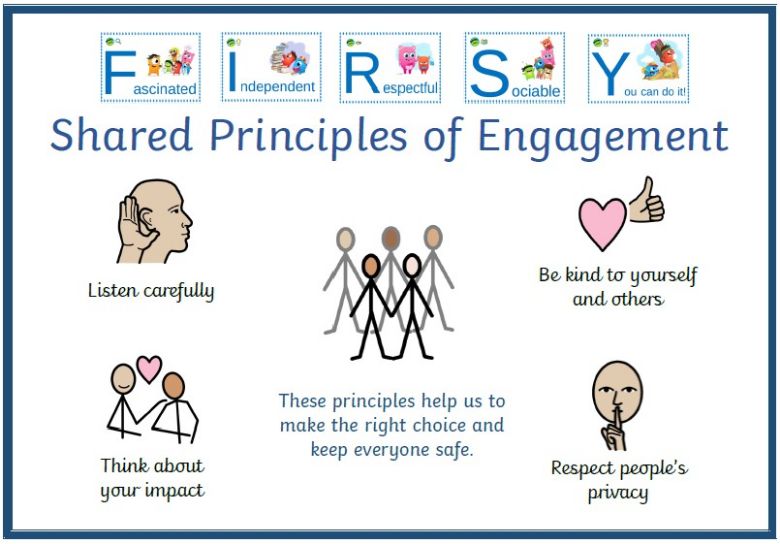
All discussions in school are guided by our Shared Principles of Engagement. They help pupils understand that their voice matters while also encouraging them to reflect on the impact their words and actions can have. By using these shared expectations, we ensure that discussions remain thoughtful, inclusive and supportive so that all children feel safe to participate and learn together.
Here are some examples of children's work related to identity.


Dealing with racist incidents
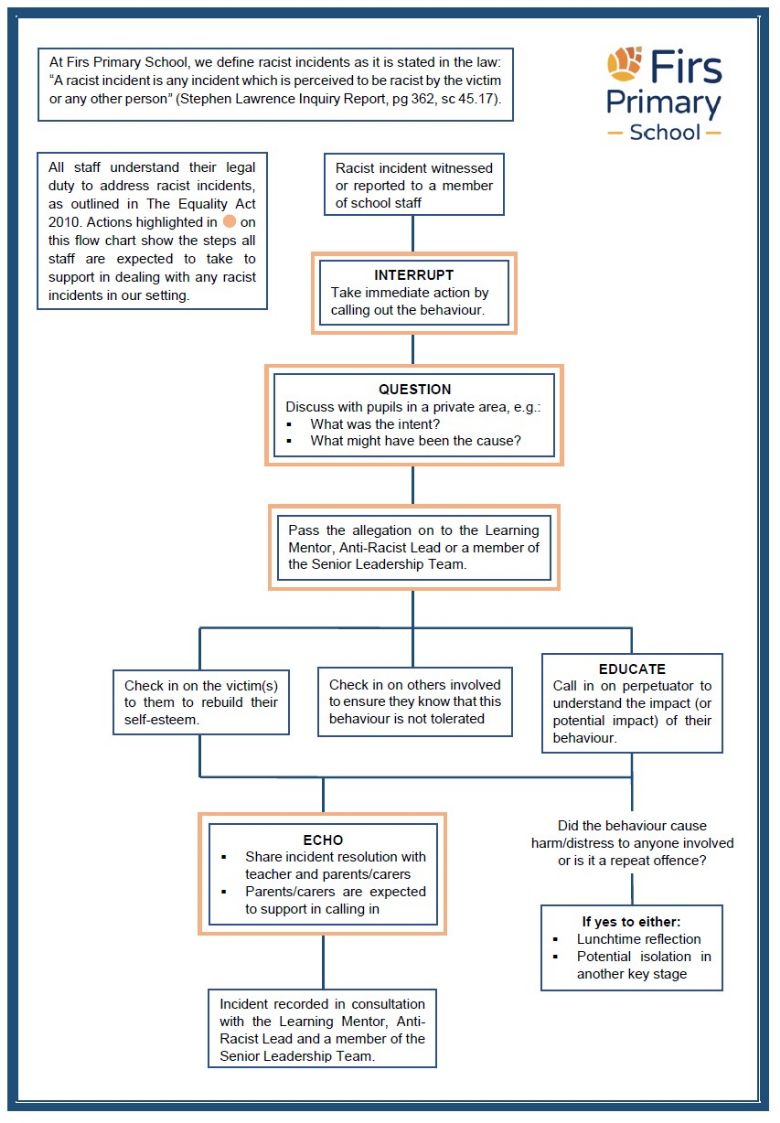
At Firs Primary School, we make it very clear that racism is not tolerated at our setting. We define racist incidents as it is stated in the law:
A racist incident is any incident which is perceived to be racist by the victim or any other person.
(Stephen Lawrence Inquiry Report, pg 362, sc 45.17).
We recognise the detrimental impact that racist incidents can have on pupils’ academic, personal, social, emotional and mental health progress. As such, we understand that racism is a safeguarding issue for our pupils and will treat all disclosures with upmost priority. We take the attitude of ‘when, not if’ racism occurs and will take appropriate action in all circumstances where racism has been reported.
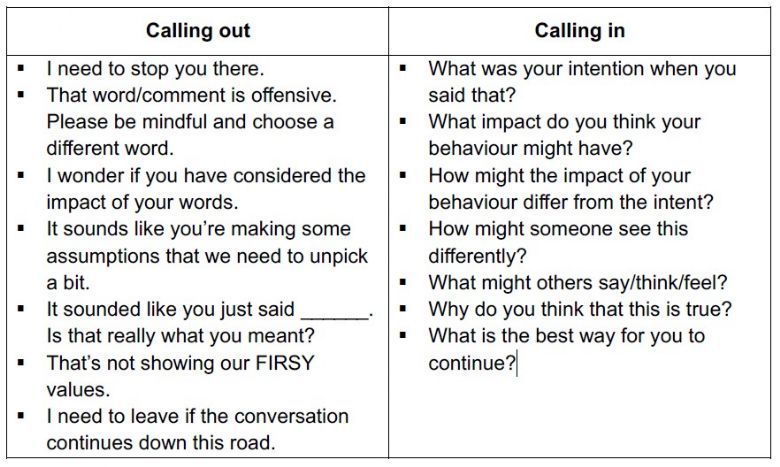
For all incidents that school staff witness, they will follow the framework of: interrupt, question, educate, echo. They will interrupt by calling out any racist behaviour immediately and visibly. Staff will then call in by questioning the intent and cause of this behaviour, and use this as an opportunity to educate pupils on the potential harm that this behaviour may cause. We expect all other staff and pupils involved, as upstanders, to echo this sentiment so it is clear that we do not tolerate discrimination.
Examples of how members of our school community may call out and call in are below. These have been adapted from Tufts University’s work on interrupting bias:
In all circumstances, the needs of all people involved will be considered, and restorative practice will be undertaken. Actions taken will be age- and context-specific, with a focus on ensuring all involved (including those within the vicinity who may have witnessed the incident) can rebuild their self-esteem and confidence. The impact of the racist behaviour, rather than the intent, will be at the forefront of decision-making. Appropriate consequences will be given depending on the severity of the situation, in line with our Positive Behaviour Policy, and school staff will contact home for all pupils involved to inform them of the incident.
The Pastoral Lead and Anti-Racist Lead will record the incident, in consultation with a member of the Senior Leadership Team. These records will then be shared with the governing body three times a year in the school’s behaviour report to identify and address any trends.